Introduction
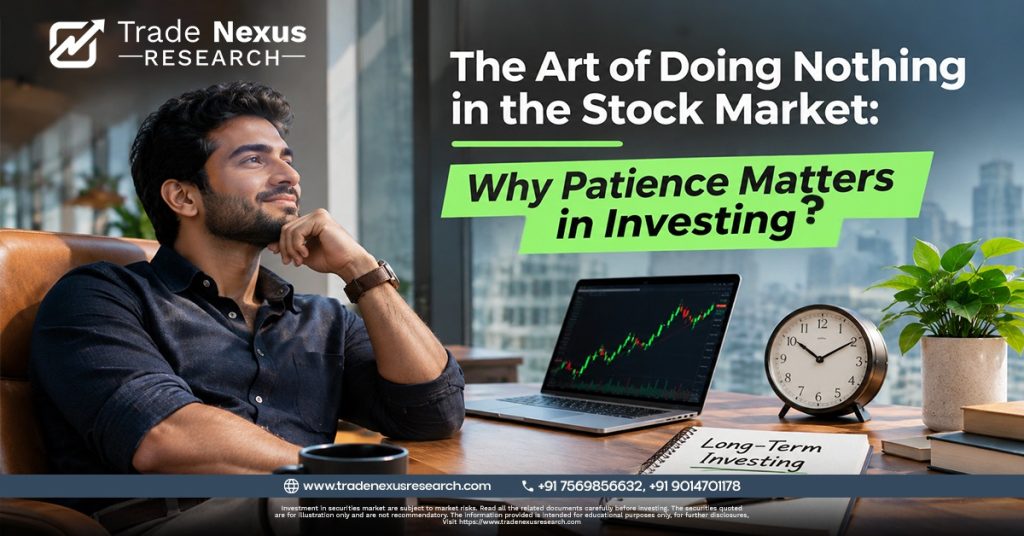
In the fast-moving world of the Stock Market, investors often feel the need to buy, sell or change their investments frequently. Every market movement creates excitement, fear or uncertainty. However, successful investing is not always about taking action. Sometimes, the smartest decision is to do nothing.
The art of doing nothing means staying patient, avoiding unnecessary trades and allowing investments to grow over time. Instead of reacting to every market fluctuation, investors should focus on long-term goals, company fundamentals and informed decision-making.
1. Why Doing Nothing Can Be a Smart Investment Strategy
Many investors believe that frequent buying and selling leads to better returns. However, unnecessary trading can increase transaction costs, taxes and the chances of making emotional decisions.
In the Stock Market, patience allows investors to stay focused on their investment strategy rather than reacting to every short-term price movement. If the company’s fundamentals remain strong and the original investment reasons are still valid, holding the investment may be a sensible approach.
2. The Power of Long-Term Investing
Long-term investing focuses on holding quality investments over an extended period instead of chasing quick profits. It gives businesses time to grow, improve their financial performance and potentially create value for shareholders.
Some benefits of long-term investing include:
- More time for potential compounding.
- Reduced focus on daily market volatility.
- Fewer unnecessary trading decisions.
- Better alignment with long-term financial goals.
- Opportunity to benefit from business growth.
However, long-term investing does not mean ignoring poor-performing companies or holding every stock indefinitely.
3. Avoid Emotional Decisions During Market Volatility
Market fluctuations are a normal part of investing. When stock prices fall, investors may panic and sell. When prices rise rapidly, they may feel pressured to buy.
Both reactions can lead to poor decisions. Investors should evaluate the reasons behind market movements instead of reacting emotionally.
A disciplined approach, supported by proper research, helps investors distinguish between temporary market volatility and genuine changes in a company’s business performance.
4. Why Patience and Research Go Together
Patience alone is not enough to become a disciplined investor. Every investment should begin with proper research and a clear understanding of the company’s financial position.
Before holding a stock for the long term, investors should evaluate:
- Company revenue and profit growth.
- Management quality and business performance.
- Debt levels and financial stability.
- Industry trends and competitive position.
- Stock valuation and potential risks.
Regularly reviewing these factors helps investors decide whether to continue holding, reassess or exit an investment.
5. The Importance of Avoiding Market Noise
Financial news, social media discussions and stock market tips can influence investment decisions. Constantly following market predictions may create unnecessary pressure to change investment strategies.
Instead of reacting to every headline, investors should focus on credible information, financial data and their original investment objectives.
The Stock Market rewards neither inactivity nor constant activity automatically. What matters is making the right decisions based on research, discipline and changing business fundamentals.
6. How Trade Nexus Research Supports Smarter Investment Decisions
Making informed investment decisions requires more than tracking stock prices. Investors need reliable research, financial analysis and a clear understanding of market developments.
Trade Nexus Research focuses on research-driven market insights to help investors understand companies, evaluate investment opportunities and make informed decisions.
By combining patience with professional research and disciplined investing, investors can develop a more structured approach to navigating market uncertainty.
Conclusion
The art of doing nothing in the Stock Market is not about ignoring investments or avoiding important decisions. It is about understanding when action is necessary and when patience is more valuable.
Long-term investing requires discipline, research and the ability to look beyond daily market fluctuations. Instead of chasing every opportunity, investors should focus on quality businesses, realistic expectations and long-term financial objectives.
Trade Nexus Research encourages informed investing through research, analysis and disciplined decision-making. Because sometimes, the smartest investment move is knowing when not to move.
Frequently Asked Questions (FAQs)
- What does doing nothing mean in the Stock Market?
It means avoiding unnecessary buying and selling, staying patient and allowing investments to perform over the long term when the original investment reasons remain valid.
- Why is patience important in stock market investing?
Patience helps investors avoid emotional decisions, reduce unnecessary trading and remain focused on their long-term financial goals.
- Is long-term investing better than short-term trading?
Both approaches have different objectives and risks. Long-term investing focuses on business growth, while short-term trading attempts to benefit from shorter price movements.
- Does holding a stock for a long time guarantee profits?
No. Long-term holding does not guarantee returns. Investors should regularly review company performance, valuations and investment risks.
- How can research improve long-term investment decisions?
Research helps investors understand company fundamentals, financial health, industry developments and potential risks before making or reviewing investment decisions.